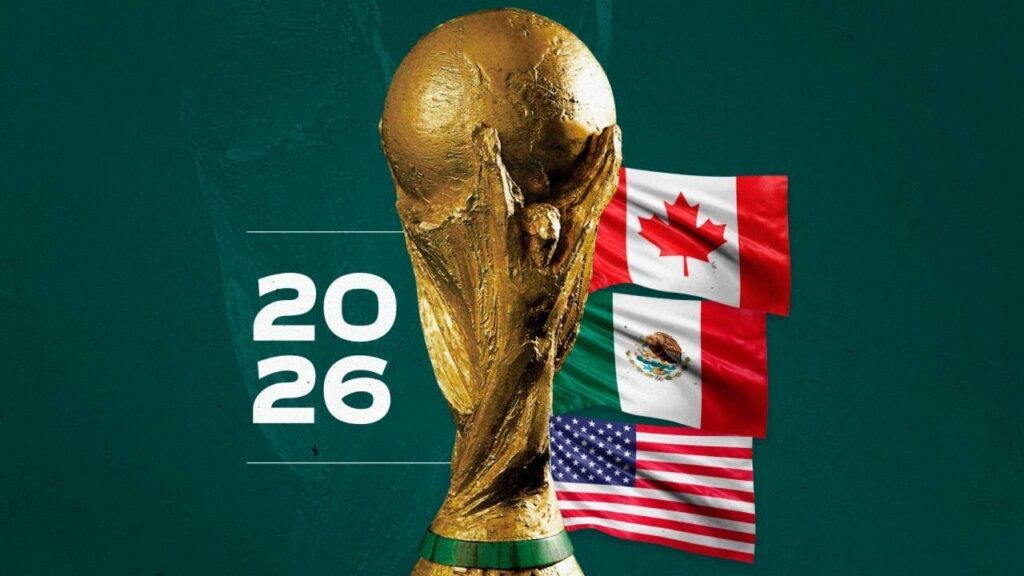
FIFA 2026 World Cup: Hosts, Format, Teams & What to Expect
The FIFA 2026 World Cup promises to be one of the most exciting tournaments ever staged. Scheduled from June 11 to July 19, 2026, this edition marks several historic firsts and changes. Hosted jointly by Canada, Mexico, and the United States, this will be the first time a World Cup is organized by three countries. Encyclopedia Britannica+2Sky Sports+2
In this post, we cover everything you need to know: the format, hosts and venues, qualification, key dates, and what to look forward to.
Hosts and Venues
- The three co-hosts automatically qualify: USA, Canada, and Mexico. Encyclopedia Britannica+2FIFA 2026+2
- Matches will take place across 16 cities in the three countries. The United States will host 11 cities, Mexico three, and Canada two. Encyclopedia Britannica+1
- The opening match is scheduled for June 11, 2026 in Mexico City, and the final will be held at MetLife Stadium in East Rutherford, New Jersey, rebranded “New York New Jersey Stadium” for the event. Inside FIFA+3Encyclopedia Britannica+3Sky Sports+3
Format & Structure: What’s Different
Several changes make the 2026 World Cup distinct:
- 48 teams will compete, up from 32 in previous tournaments. Encyclopedia Britannica+1
- These 48 will be divided into 12 groups of 4 teams each in the group stage. Encyclopedia Britannica+1
- The top two teams from each group advance to the knockout rounds; in addition, the top eight third-place teams (from the 12 groups) will also advance, making up a Round of 32. Encyclopedia Britannica+1
- The tournament will include 104 matches in total. Encyclopedia Britannica+1
Qualification & Qualified Teams
A mix of automatic qualifiers and successful teams from regional qualifiers will fill the 48 slots. Here’s the current breakdown and some teams already qualified:
- Automatic qualification: Canada, Mexico, USA (as hosts) FIFA 2026+1
- Already qualified teams (as of mid-2025) include:
- Asia (AFC): Japan, Iran, Uzbekistan, South Korea, Jordan, Australia FIFA 2026+1
- South America (CONMEBOL): Argentina, Brazil, Ecuador etc. FIFA 2026+1
- Oceania (OFC): New Zealand secured the spot by winning the OFC final. FIFA 2026+1
Many other teams are still fighting through qualifiers from Africa (CAF), Europe (UEFA), South America, Asia, and the inter-confederation playoffs. Sky Sports+2Al Jazeera+2
Key Dates to Know
- Tournament dates: June 11 – July 19, 2026 Sky Sports+1
- Draw for the final tournament: December 5, 2025 (Washington) Sky Sports+1
- Final stages of qualifiers: Many confederation qualification windows conclude in late 2025; Europe in early-to-mid 2026. Sky Sports+1
Why FIFA 2026 Will Be Special
- Unprecedented scale and inclusion: With 48 teams, more nations will have a chance to appear and compete at the top level.
- Joint hosting across three countries: Gives more diversity to venue culture, fan experiences, travel opportunities, etc.
- New format with more knockout stage drama: The eight best third-place teams advancing means groups will matter even for teams that don’t finish first or second.
- Massive fan turnout expected: With venues spread across major cities in USA, Mexico, and Canada, stadiums will draw large, international crowds. Inside FIFA+1
Challenges & What to Watch Out For
- Logistics & travel: Fans following their teams may need to travel long distances across countries.
- Scheduling fairness: Balancing match times, group rest periods, and travel demands for teams and fans.
- Qualifiers pressure: Teams in tough confederations will need to navigate strong competition to secure spots.
- Stakes for junior or less traditional football nations: For many, qualifying alone would be historic.
Predictions & What to Expect
While it’s early, here are some educated guesses:
- Traditional powerhouses like Brazil, Argentina, Germany, Spain will likely go far.
- Debutant or rarely qualified countries (e.g. Jordan, Uzbekistan) might shock teams in group stages.
- Matches in the knockout rounds will probably show wider goal margins due to the expanded field, but also more surprises.
Conclusion
The 2026 FIFA World Cup is gearing up to be the biggest, most global, and most inclusive edition yet. Between the expanded 48-team format, the co-hosting by three countries, and new qualification dynamics, football fans around the world have a lot to look forward to.
Stay tuned for the draw in December 2025, watch the remaining qualifiers closely, and start planning your World Cup calendars now — because June 11, 2026 will be here before you know it.